At the core, it is about Black midwifery-A legacy of care, resilience, and cultural wisdom. Here, you can explore what Birth Justice Means, why it is essential, and how we can support and sustain it together.
Entering the Story of Birth Justice
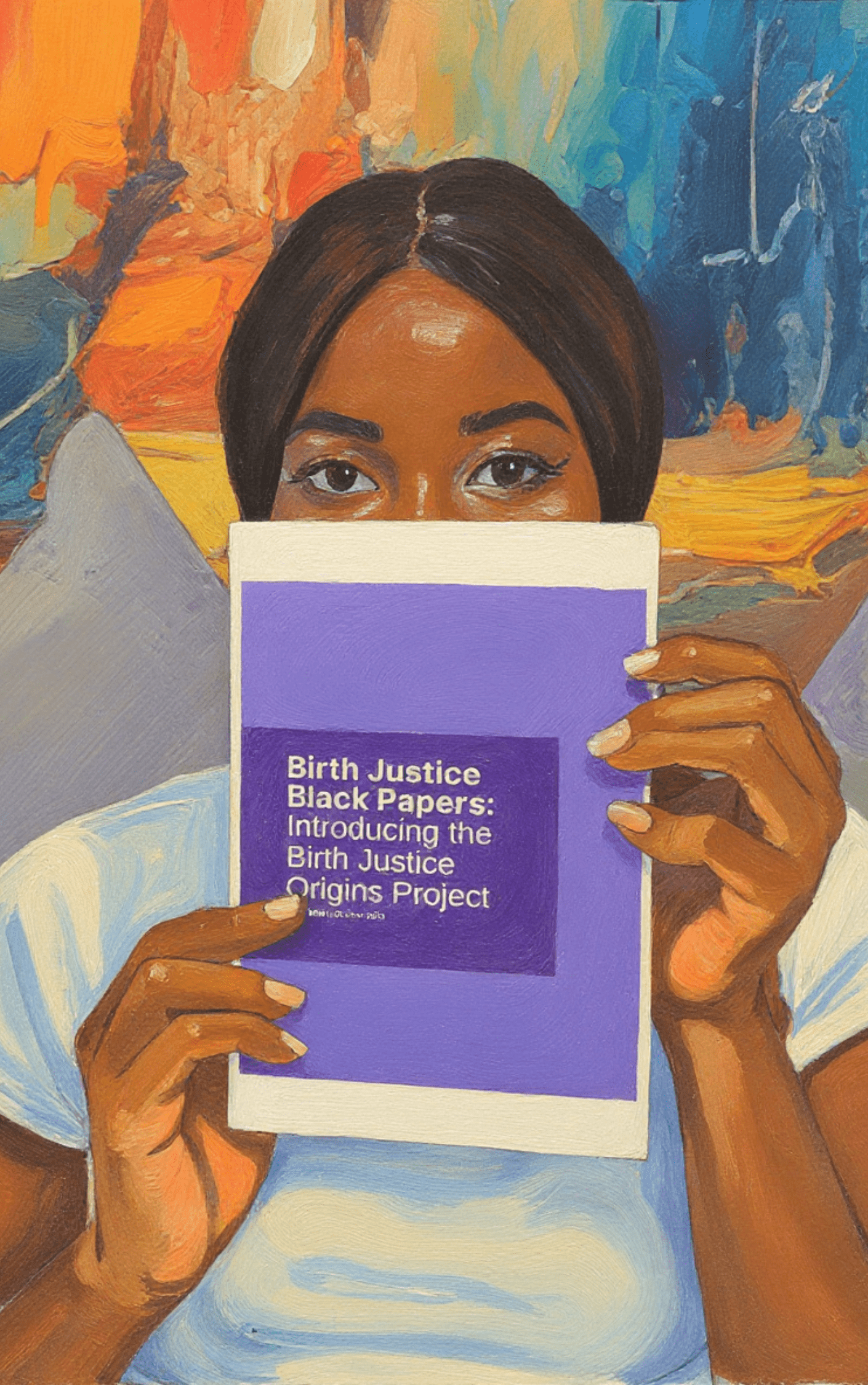
The Birth Justice Black Papers are a seven-part series tracing the roots, values, and future of the birth justice movement. Together, they tell the story of Black midwives, healers, and communities reclaiming reproductive care as a site of autonomy, dignity, and liberation. With this offering, the Birth Justice Origins Project we invite you into the story of birth justice—to explore its legacy, worldview, and evolving practices.
Birth justice insists that all people—especially Black, Indigenous, and marginalized communities—deserve safe, respectful, and culturally grounded care across the full reproductive life course, from menarche to menopause, abortion to homebirth. It exposes how systemic racism, medical neglect, and the attempted eradication of midwifery have fueled maternal health inequities, and uplifts the solutions already working: Black midwifery, doulas, and community birth centers.
At the heart of this work are midwives and doulas. Midwives are licensed professionals who deliver babies and provide prenatal, labor, and postpartum care. Doulas offer non-medical support—emotional care, physical comfort, and advocacy. Together, they create a continuity of care that centers safety, dignity, and empowerment.
The Black Papers honor this leadership, affirm the values of birth justice, and invite all of us to join in the beautiful work of building a world where every birth is celebrated, protected, and free.
Preface and Introduction: Welcome from Jamarah Amani and an introduction to The Black Papers.
Birth Justice and Black Midwifery: We trace the legacy of Black midwives from Africa to the U.S. South and show how their traditions shaped community health and survival.
Birth Justice Values, Framework, and Call to Action: We outline the movement’s guiding principles and values and chart the framework for systemic change.
Birth Justice Key Issues:We examine urgent challenges—from maternal mortality and shackling to parental rights and access to care.
The Funding Gap: Why Resourcing Birth Justice with Justice Matters:We expose chronic underinvestment in Black midwives and birth centers and call for bold, sustained funding.
Birth Justice Futures: Envisioning a World of Equity and Care: We envision a world where midwifery is fully resourced, accessible, and central to maternal health systems.
Shaping Abundant Futures: FAQs:We provide grounding definitions and context across the reproductive life course. (7A delves into more background detail while 7B provides a concise summary, similar to a flyer.)
Please feel free to download the papers as a single complete document that includes the table of contents, or choose to download each paper separately—whichever works best for you!
In the Black papers that follow, we trace the historical, political, and cultural roots of the birth justice movement and outline a roadmap for transformation. For grounding, we turn to Black Women Birthing Justice, which defines birth justice as both an aspirational future and a movement against reproductive oppression.
“Birth Justice exists when women and trans folks are empowered during pregnancy, labor, childbirth and postpartum to make healthy decisions for themselves and their babies. Birth Justice is part of a wider movement against reproductive oppression. It aims to dismantle inequalities of race, class, gender and sexuality that lead to negative birth experiences, especially for women of color, low-income women, survivors of violence, immigrant women, queer and trans folks, and women in the Global South.”
— Black Women Birthing Justice
Click the button below to download all seven Birth Justice Black Papers, individually, or download the Full Version with table of contents.